Unlike the cheese eating surrender monkeys internationally known as the French, most of us sadly work more than 35 hours a week, and do not count eight weeks of vacation as a job perk. This I would imagine directly correlates to the fact that they are enjoying soufflés, cassoulets and spicy bouillabaisse dishes on a random Tuesday evening, when most of us are sifting through take out menus. And while I do enjoy takeout, although probably far less often than most, there are some pretty good reasons to cut back on the habit, heart failure falling somewhere near the top of the list, and the contents of a chicken McNugget trailing shortly behind.
Yet there are a number of obstacles that make cooking a challenge, such as limited time, a strict budget, or a drinking habit that makes extensive use of knives an unwise decision. So the below is a recipe for a simple one pan roast chicken with root vegetables. I was home alone this night so I used a 20oz Poussin, but if feeding more than one person it makes sense to seek out a small three to four pound organic chicken. And if you are one of a large number of people intimidated by the concept of cooking a whole chicken, look yourself in the mirror and repeat "I am scared of a chicken" until you are thoroughly embarrassed enough to try the below.
Simple Roast Chicken
Small to medium sized bird
a handful of small white potatoes per person
olive oil
herbs
salt and pepper
Preheat the oven to 425. Rinse, pat dry, and proceed to truss the chicken, (the link is a great video on how to do this). Placing it in the middle of a frying pan, and seasoning with herbs, and S&P. Make sure to do this from high above, to assure that they are evenly spread. Slice the potatoes into halves or quarters, and lightly toss the potatoes in olive oil, herbs, and S&P, before spreading around the outside of the bird. Roast for 30-45 minutes, depending on the size of the bird. The internal temperature should reach roughly 160 and the skin should be a golden brown. If the skin appears to be darkening quicker than desired, cover the bird in tin foil. When the bird is done, plate the potatoes and move the chicken to a cutting board to rest. In the meantime, using an oven mit, move the frying pan to the stove-top on medium heat, add some white wine, or water, scraping the bottom and reducing to form a sauce, adding sliced mushrooms if desired. Slice and plate the bird alongside the potatoes and cover in the thickened sauce. Serve.
This was a woman's out of town kinda night, so I ate it with scotch....lots of scotch.
Friday, May 28, 2010
Mayhem, Money, and Maine.
I like fish, and not just fish, but crustaceans, mollusks, and cephalopods. In fact, with the exception of sea urchin roe, which yes, I have tried, I will eat just about any of the sea's many creatures, most times, raw. With our own national waters supplying numerous species including lobster from Maine, salmon from Alaska, sailfish from Florida, and a bevy of shrimp from the Louisiana bayou; the choices and the supply appear nearly limitless when harvested utilizing sustainable fishing practices. That is of course, as long as we don't cover the oceans in oil.
Forty seven days have passed since the April 20th BP oil well explosion, and numerous media centric questions still remain. Does fault lie with BP who pumped the oil, Transocean who owned the rig, Halliburton who performed the construction, or the questionably negligent regulatory authority of the MMS? Do we now, or will we ever accurately know how much oil is leaking daily? Did the White House respond in a timely and effective manner, and more importantly, can we rely upon the government to right such disasters, for which they appear so ill equipped?
But are these the questions that we should be asking and do the answers even matter? Yes, the cleanup process will be long and arduous, and in many cases irreversible damage has been done, but BP will be held accountable, regardless of where true fault may lie. And the Obama administration will survive, albeit stymied, and possibly even a little embarrassed, as attempts to increase the role of government, following numerous failures by both parties, will be further examined by supporters and detractors alike. Yet, the one question that has been pushed to the back burner, is the one that we can all personally influence; how do we avoid repeating such a catastrophe?
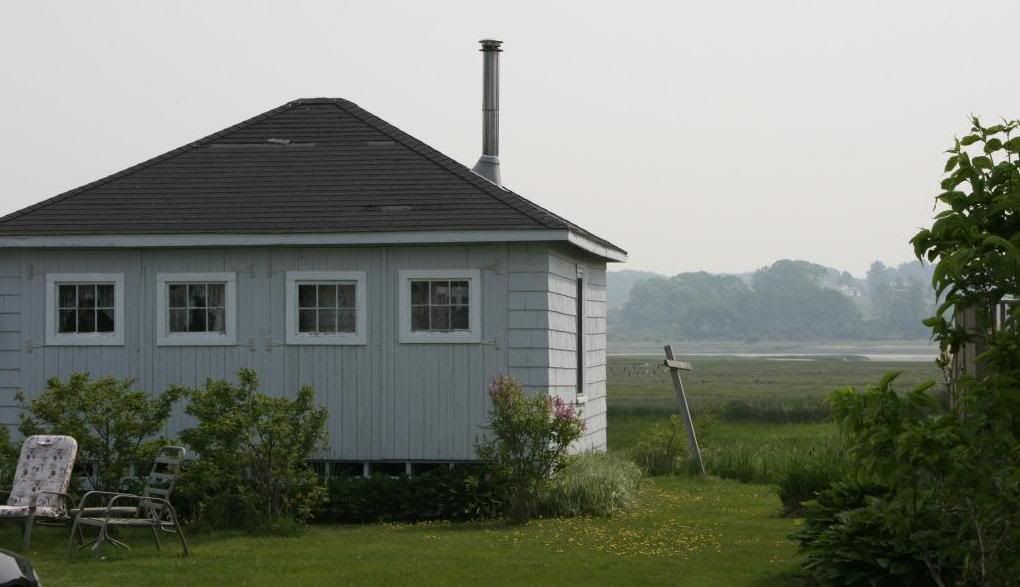
Well we can start by dipping our sushi in soy sauce, not light sweet crude. Limit driving, increase the use of mass transit, like the bolt bus currently carrying me to the still pristine shores of Maine, and seek out high mileage vehicles whenever possible. Support local and national efforts to pursue a cost effective, carbon neutral energy grid, and remind politicians that energy independence is a national , not republican or democratic concern. Buy local. Reducing the distance from farm to plate limits the need for heavy transport, and subsequently lessens the demand for oil. I'll say it again. Buy local, and buy organic. Visit a farmer's market, join a CSA, and get to know the man or woman who raises your food, preferably without the use of oil based chemical fertilizers, herbicides, and pesticides. You won't regret it, hell, you might even make a new friend....a friend who actually has knowledge that could keep you alive, unlike the skills that help most of us excel in the modern work environment. Oil companies are convenient whipping boys, but weaning ourselves off the black gold that they so ferociously seek to mollify our own demand is the difficult but ultimate solution.
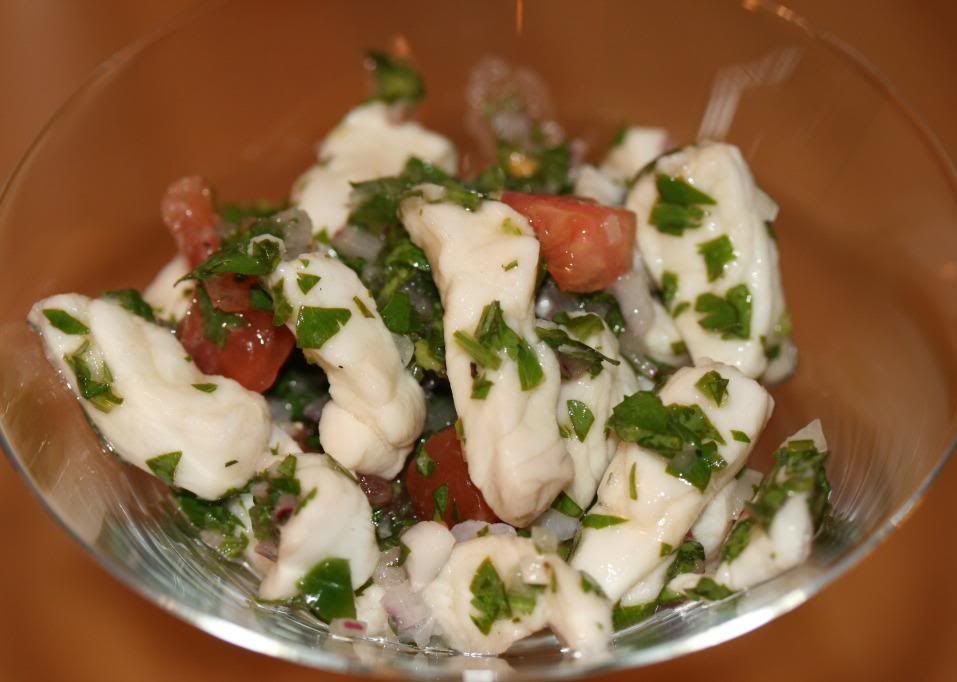
The fact that fish tastes good is indisputable, and oil, well anyone who may have unscrupulously siphoned gas a bit too aggressively knows it tastes like liquid fiery death. So the next time you walk a few blocks as opposed to driving, or pay thirty extra cents for organic carrots at the farmer's market, or even grab a reusable shopping bag think about how great some sockeye salmon, or soft shell crab would taste right about now. And when the inevitable time comes when your friends mock your environmentally conscious ways and brandish you a dirty hippie, invite a crowd over for a seafood fest. Start with the ceviche or sushi below and serve the naysayers their meal, covered in oil.
Ceviche
1/3 pound fillet of white fish, (good guide here)
juice from two large lims limes
juice from half a lemon
1/2 medium size tomato, chopped fine
1/3 medium red onion, chopped fine
1/2 jalapeno, seeds removed, and minced
1 clove garlic, minced
1/4 c finely chopped cilantro
salt and pepper to taste
Place the sliced fish in a nonreactive container. Mix the remaining ingredients and spread over the fish. Let it set for a few minutes and then shake the container to mix and ensure everything is well marinated. Refrigerate and mix several times over the next 8-12 hours. Serve.
Sushi Rice
1c rice
2 tbsp rice vinegar
1 tbsp sugar
1 tsp salt
Move the cooked rice to a nonreactive bowl, add the vinegar and begin to toss the rice, with a non metal spoon. Add the salt and sugar and continue to toss, cooling the rice as you season.
While making great sushi may require numerous years of proper training, technique and extensive knowledge to master the art, when making sushi at home, it pretty much comes down to the quality of your ingredients and how you season the rice. If you live in the middle of nowhere, Whole Foods may be your only choice, but I would highly recommend seeking out a local fish monger, The Lobster Place in Chelsea is excellent if you are in NYC.
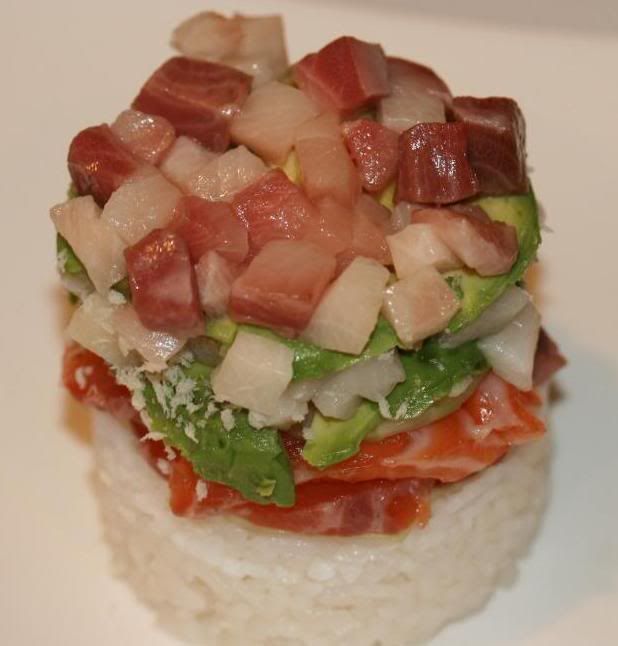
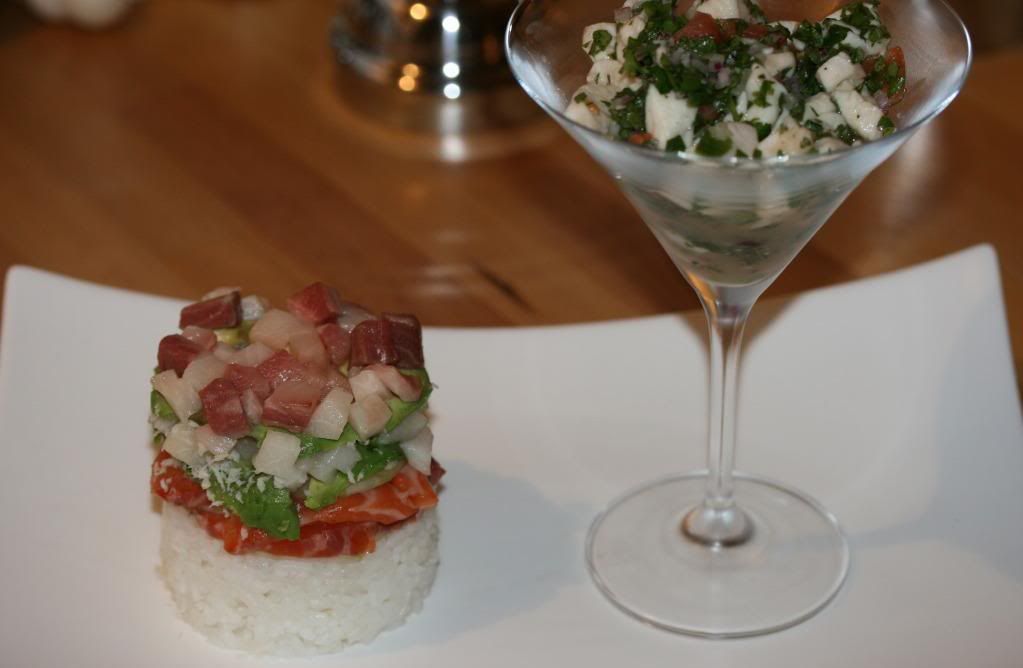
I layered the rice, cucumbers, wild caught salmon, avocado, and hamachi tuna, in a small tower, with soy sauce to dip, and served it along side the ceviche, which pairs very well with a Long Island based Viognier, which has a very floral bouquet and complements the citrus flavors..
Forty seven days have passed since the April 20th BP oil well explosion, and numerous media centric questions still remain. Does fault lie with BP who pumped the oil, Transocean who owned the rig, Halliburton who performed the construction, or the questionably negligent regulatory authority of the MMS? Do we now, or will we ever accurately know how much oil is leaking daily? Did the White House respond in a timely and effective manner, and more importantly, can we rely upon the government to right such disasters, for which they appear so ill equipped?
But are these the questions that we should be asking and do the answers even matter? Yes, the cleanup process will be long and arduous, and in many cases irreversible damage has been done, but BP will be held accountable, regardless of where true fault may lie. And the Obama administration will survive, albeit stymied, and possibly even a little embarrassed, as attempts to increase the role of government, following numerous failures by both parties, will be further examined by supporters and detractors alike. Yet, the one question that has been pushed to the back burner, is the one that we can all personally influence; how do we avoid repeating such a catastrophe?
Well we can start by dipping our sushi in soy sauce, not light sweet crude. Limit driving, increase the use of mass transit, like the bolt bus currently carrying me to the still pristine shores of Maine, and seek out high mileage vehicles whenever possible. Support local and national efforts to pursue a cost effective, carbon neutral energy grid, and remind politicians that energy independence is a national , not republican or democratic concern. Buy local. Reducing the distance from farm to plate limits the need for heavy transport, and subsequently lessens the demand for oil. I'll say it again. Buy local, and buy organic. Visit a farmer's market, join a CSA, and get to know the man or woman who raises your food, preferably without the use of oil based chemical fertilizers, herbicides, and pesticides. You won't regret it, hell, you might even make a new friend....a friend who actually has knowledge that could keep you alive, unlike the skills that help most of us excel in the modern work environment. Oil companies are convenient whipping boys, but weaning ourselves off the black gold that they so ferociously seek to mollify our own demand is the difficult but ultimate solution.
The fact that fish tastes good is indisputable, and oil, well anyone who may have unscrupulously siphoned gas a bit too aggressively knows it tastes like liquid fiery death. So the next time you walk a few blocks as opposed to driving, or pay thirty extra cents for organic carrots at the farmer's market, or even grab a reusable shopping bag think about how great some sockeye salmon, or soft shell crab would taste right about now. And when the inevitable time comes when your friends mock your environmentally conscious ways and brandish you a dirty hippie, invite a crowd over for a seafood fest. Start with the ceviche or sushi below and serve the naysayers their meal, covered in oil.
Ceviche
1/3 pound fillet of white fish, (good guide here)
juice from two large lims limes
juice from half a lemon
1/2 medium size tomato, chopped fine
1/3 medium red onion, chopped fine
1/2 jalapeno, seeds removed, and minced
1 clove garlic, minced
1/4 c finely chopped cilantro
salt and pepper to taste
Place the sliced fish in a nonreactive container. Mix the remaining ingredients and spread over the fish. Let it set for a few minutes and then shake the container to mix and ensure everything is well marinated. Refrigerate and mix several times over the next 8-12 hours. Serve.
Sushi Rice
1c rice
2 tbsp rice vinegar
1 tbsp sugar
1 tsp salt
Move the cooked rice to a nonreactive bowl, add the vinegar and begin to toss the rice, with a non metal spoon. Add the salt and sugar and continue to toss, cooling the rice as you season.
While making great sushi may require numerous years of proper training, technique and extensive knowledge to master the art, when making sushi at home, it pretty much comes down to the quality of your ingredients and how you season the rice. If you live in the middle of nowhere, Whole Foods may be your only choice, but I would highly recommend seeking out a local fish monger, The Lobster Place in Chelsea is excellent if you are in NYC.
I layered the rice, cucumbers, wild caught salmon, avocado, and hamachi tuna, in a small tower, with soy sauce to dip, and served it along side the ceviche, which pairs very well with a Long Island based Viognier, which has a very floral bouquet and complements the citrus flavors..
Monday, May 24, 2010
Bayonne Thin Crust
Native New Yorkers, and the vast majority of those who adopt this city as their own, routinely push their differences aside, uniting under the audacious belief, that New York City is in fact, the center of the known universe. This is however not meant to belittle the beautiful diversity this nation provides, expanding across the Pacific mountain ranges, through the Midwestern plains, and up the salt licked East Coast. And seldom will you find a New Yorker who doesn’t have a true appreciation for the international wonders of Melbourne, Paris, or Hong Kong. However, every story of trips taken, scenery viewed, foods tasted, and cultures enjoyed, ends with the same few words….."it just wasn’t New York." This local devotion to all things New York is exponentially magnified when applied to a simple slice of pizza. More commonplace than a burger and fries, no one meal is more thoroughly reviewed, discussed, and waited in line for, than the perfect slice. A commodity so deeply ingrained in the fabric of the city, that economists have long measured its economic strength by the prevailing cost of a slice.
And while I do often unapologetically subscribe to this philosophy of superiority, pizza is where I draw the line. As a native son of New Jersey, I know something most New Yorkers do not. The best pizza in the states, if not the world, does not come from New Amsterdam, and it sure as hell is not Chicago style deep dish, no the best pizza in the world comes from the small city of Bayonne. Located less than five miles from the Italian strongholds of lower Manhattan, and Brooklyn, the city of Bayonne did something borderline unimaginable….they took an old world New York style pizza recipe…..and made it better. Yes, there are pizzerias in NYC where you can obtain such a slice, but it was born in New Jersey, and since that time it has been gathering devotees with the first bite of every slice.
Below is my not so humble attempt to recreate that magic, using quality organic ingredients, and NYC tap water, straight from the mountains of the lower Hudson Valley.
Dough:
3c flour
1 5/8 c water
2 tsp salt
1 tsp honey (or sugar)
1/2 tsp yeast
While this can certainly be mixed by hand, and then kneaded on an appropriately flat surface, I prefer to use an electric mixer. Add a 1/4c of warm water to the bowl, along with the honey and yeast, stir, and allow to rest for five - ten minutes. Add the remaining ingredients and let the dough hook work them together at a medium speed for about 4 minutes. Cover the bowl with saran wrap and allow it to rise. I like to make this a day ahead of time, as the flavors seem more robust and developed, but 2-3 hours should be sufficient if you double the amount of yeast and reduce the water by a 1/4c.
Basic Sauce:
14 ounce can of organic tomatoes
4 large cloves garlic
2 tbsp chopped basil
1 tbsp chopped oregano
2 tbsp chopped shallots
Extra virgin Olive Oil
Salt
Lightly coat the bottom of a pan with olive oil, and add the garlic and shallots. Sauté the alliums over medium heat for 1-2 minutes before adding the herbs. After an additional minute, add the tomatoes and cook on medium-high heat until it begins to reduce. At this point the tomatoes should be soft, to create a smoother sauce, crush the tomatoes with a potato masher, and continue to reduce until you have a relatively viscous sauce, adding salt to taste.
*You should grow your own, but if using dry herbs, cut the quantity in half.
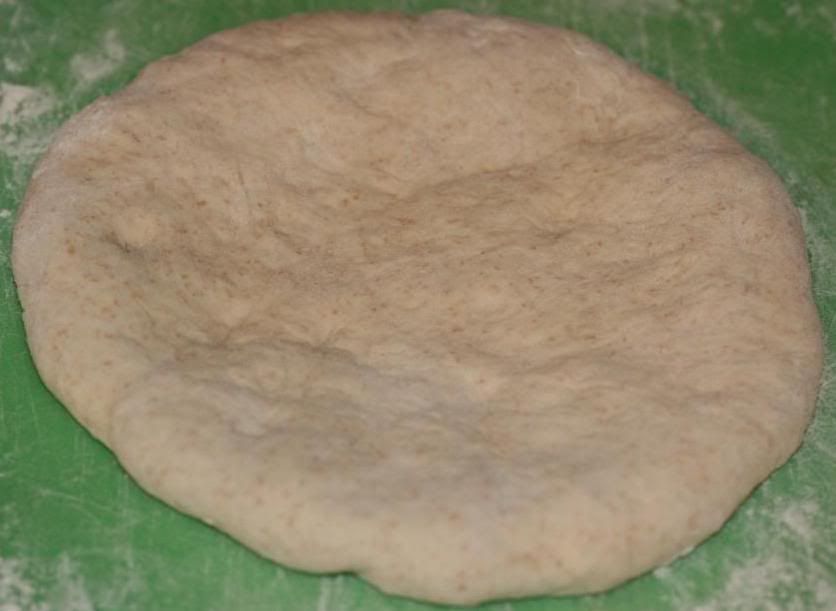
When it is finally time to unwrap the dough, divide it into four equally sized portions, and using your hands on a well floured surface, create relatively flat circles. From here I
lightly flour the surface of the dough and using a rolling pin, thin the dough as much as possible, leaving slightly more at the edges for the crust. Once the dough is flat, cover it in saran wrap and allow it to rise slightly while you prepare the other ingredients. Set the oven to 500F.
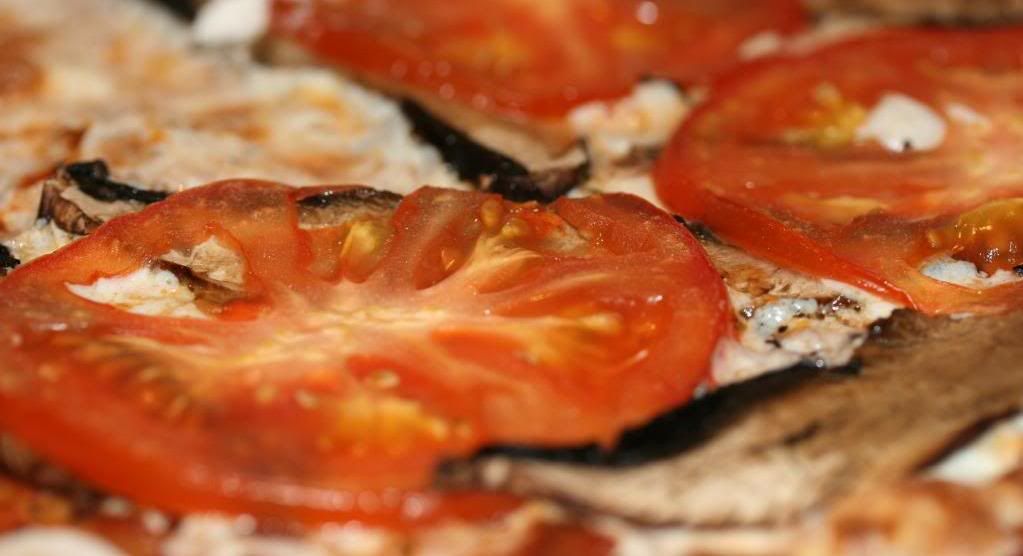
Once the oven is hot, and the toppings are ready, ladle the sauce onto the center of the pizza spreading it out to form a thin layer. Add the other toppings sparingly, as too much moisture can hurt the crust, and brush or spray the edges of the crust with a light dusting of olive oil, before placing the pie on a preheated pizza stone. You can do this on a baking sheet, but the resulting crusts aren’t nearly comparable. If adding things such as fresh basil, make sure to add them near completion, as they are unable to withstand the high heat and will quickly turn black.
*I prefer a combo of mozzarella and parmesan.
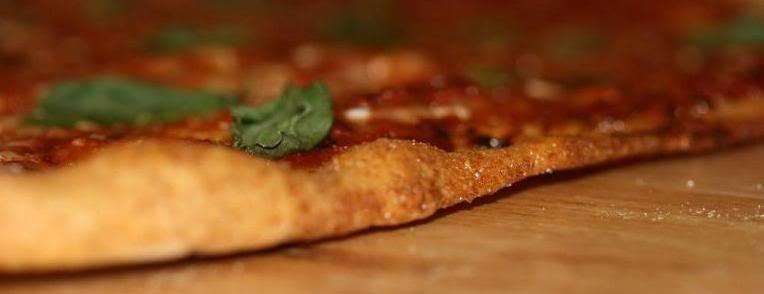
Flip the light on in the oven and keep an eye on it, removing the pizza when the cheese starts to bubble and the crust turns a golden brown.
Pairs pretty well with a medium bodied Shiraz, Cabernet, or light Chianti. Also not so bad with a six pack.
And while I do often unapologetically subscribe to this philosophy of superiority, pizza is where I draw the line. As a native son of New Jersey, I know something most New Yorkers do not. The best pizza in the states, if not the world, does not come from New Amsterdam, and it sure as hell is not Chicago style deep dish, no the best pizza in the world comes from the small city of Bayonne. Located less than five miles from the Italian strongholds of lower Manhattan, and Brooklyn, the city of Bayonne did something borderline unimaginable….they took an old world New York style pizza recipe…..and made it better. Yes, there are pizzerias in NYC where you can obtain such a slice, but it was born in New Jersey, and since that time it has been gathering devotees with the first bite of every slice.
Below is my not so humble attempt to recreate that magic, using quality organic ingredients, and NYC tap water, straight from the mountains of the lower Hudson Valley.
Dough:
3c flour
1 5/8 c water
2 tsp salt
1 tsp honey (or sugar)
1/2 tsp yeast
While this can certainly be mixed by hand, and then kneaded on an appropriately flat surface, I prefer to use an electric mixer. Add a 1/4c of warm water to the bowl, along with the honey and yeast, stir, and allow to rest for five - ten minutes. Add the remaining ingredients and let the dough hook work them together at a medium speed for about 4 minutes. Cover the bowl with saran wrap and allow it to rise. I like to make this a day ahead of time, as the flavors seem more robust and developed, but 2-3 hours should be sufficient if you double the amount of yeast and reduce the water by a 1/4c.
Basic Sauce:
14 ounce can of organic tomatoes
4 large cloves garlic
2 tbsp chopped basil
1 tbsp chopped oregano
2 tbsp chopped shallots
Extra virgin Olive Oil
Salt
Lightly coat the bottom of a pan with olive oil, and add the garlic and shallots. Sauté the alliums over medium heat for 1-2 minutes before adding the herbs. After an additional minute, add the tomatoes and cook on medium-high heat until it begins to reduce. At this point the tomatoes should be soft, to create a smoother sauce, crush the tomatoes with a potato masher, and continue to reduce until you have a relatively viscous sauce, adding salt to taste.
*You should grow your own, but if using dry herbs, cut the quantity in half.
When it is finally time to unwrap the dough, divide it into four equally sized portions, and using your hands on a well floured surface, create relatively flat circles. From here I
lightly flour the surface of the dough and using a rolling pin, thin the dough as much as possible, leaving slightly more at the edges for the crust. Once the dough is flat, cover it in saran wrap and allow it to rise slightly while you prepare the other ingredients. Set the oven to 500F.
Once the oven is hot, and the toppings are ready, ladle the sauce onto the center of the pizza spreading it out to form a thin layer. Add the other toppings sparingly, as too much moisture can hurt the crust, and brush or spray the edges of the crust with a light dusting of olive oil, before placing the pie on a preheated pizza stone. You can do this on a baking sheet, but the resulting crusts aren’t nearly comparable. If adding things such as fresh basil, make sure to add them near completion, as they are unable to withstand the high heat and will quickly turn black.
*I prefer a combo of mozzarella and parmesan.
Flip the light on in the oven and keep an eye on it, removing the pizza when the cheese starts to bubble and the crust turns a golden brown.
Pairs pretty well with a medium bodied Shiraz, Cabernet, or light Chianti. Also not so bad with a six pack.
Wednesday, May 12, 2010
1st Harvest
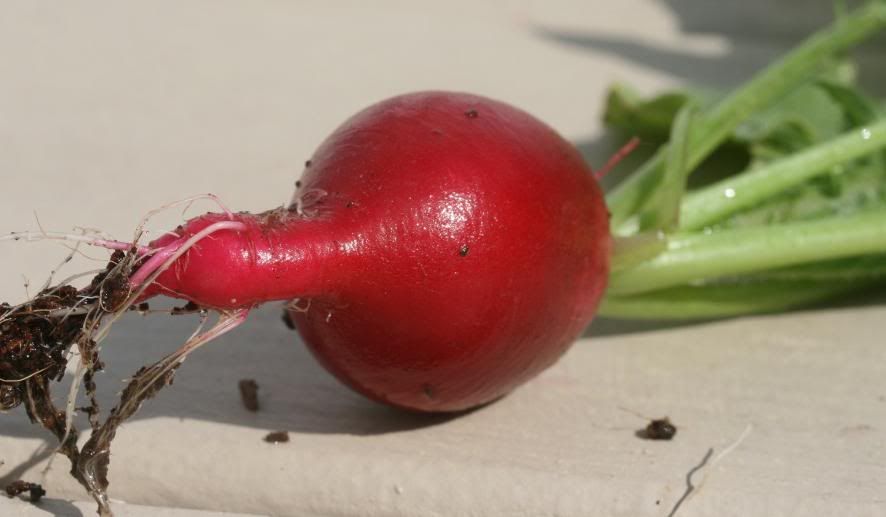
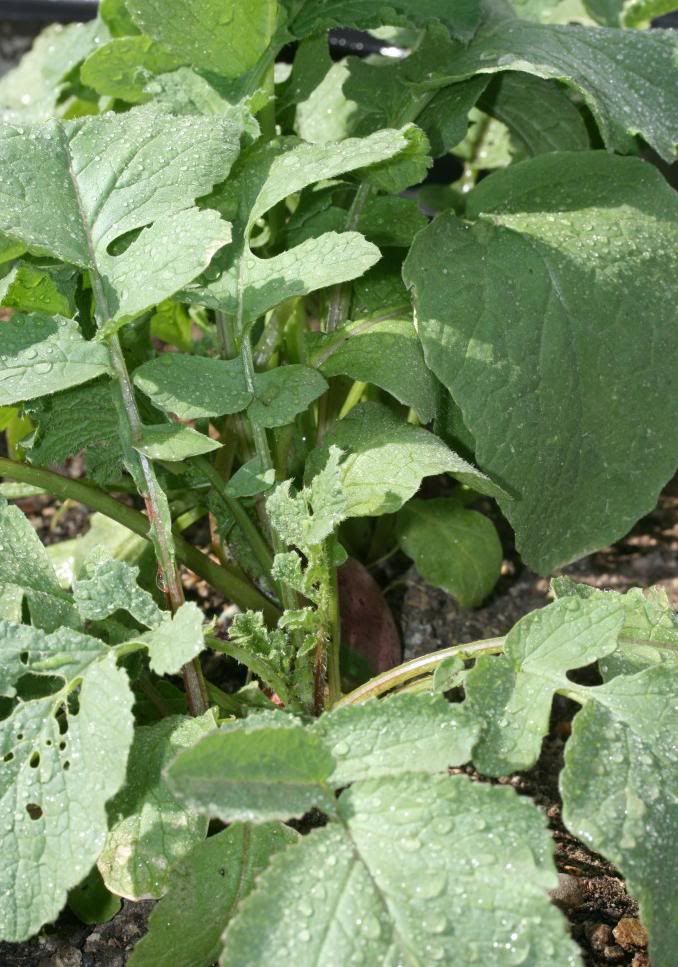
While I can certainly understand that the average person is less inclined than myself to attempt back flips at the sight of a radish; allow me to briefly explain my level of excitement. This tiny red globe, born from seed, spent a mere five weeks nestled in the dirt before reaching its potential, but mentally I planted those seeds months prior.
Two weekends in October, six friends, gourmet fare, and conversation thoroughly lubricated by a consistent flow of alcohol, resulted in an obvious, albeit astonishing, revelation. Everything has changed; well more specifically our perception of everything has changed. Perhaps experience has made us a little smarter, a little slower to judge, a little more receptive to opinions we would have previously dismissed as not in line with our own. Or perhaps the realities of the recession have forced us to realign our priorities, while the visible aging of our parents has enhanced a sense of our own mortality. But regardless of the source, the resultant is the same, a desire to leave a lasting legacy, regardless of its size and somehow fulfill our social responsibility.
Although equally likely lies the scenario that these revealing verbal exchanges were nothing more than a bunch of overeducated, financially privileged, late 20-somethings waxing poetic about problems that they do not now, nor are they likely to experience in the future.
Yet without paying much regard to the previous sentence and potentially blindly ignoring the potential hubris involved, a theme emerged: Sustainability.
And not the overused, holier than thou, altruistic image most commonly associated with the word in modern times, but sustainability in the sense that a genuine effort will be made to sustain my physical and mental self, the relationships in my life, and the greater community through a re-evaluation of the food system in general. Minimizing waste, by using the entire product, whether plant or animal, sourcing humanely raised and organic ingredients, and to the limits that my Brooklyn fire escape will allow….growing my own food. And probably most importantly talking about it….not everyone has a compost pile of their own, but simple decisions, like buying organic over conventionally raised products helps in it’s own little way to protect the environment and the world at large. I believe that there is very little we can do to the earth, that with ample time, it cannot successfully repair. However, whether the planet keeps humanity around for that process.... is still up for debate.
I ate the radishes with nothing but a spread of butter, and sautéed the greens in olive oil with salt and pepper.
Two weekends in October, six friends, gourmet fare, and conversation thoroughly lubricated by a consistent flow of alcohol, resulted in an obvious, albeit astonishing, revelation. Everything has changed; well more specifically our perception of everything has changed. Perhaps experience has made us a little smarter, a little slower to judge, a little more receptive to opinions we would have previously dismissed as not in line with our own. Or perhaps the realities of the recession have forced us to realign our priorities, while the visible aging of our parents has enhanced a sense of our own mortality. But regardless of the source, the resultant is the same, a desire to leave a lasting legacy, regardless of its size and somehow fulfill our social responsibility.
Although equally likely lies the scenario that these revealing verbal exchanges were nothing more than a bunch of overeducated, financially privileged, late 20-somethings waxing poetic about problems that they do not now, nor are they likely to experience in the future.
Yet without paying much regard to the previous sentence and potentially blindly ignoring the potential hubris involved, a theme emerged: Sustainability.
And not the overused, holier than thou, altruistic image most commonly associated with the word in modern times, but sustainability in the sense that a genuine effort will be made to sustain my physical and mental self, the relationships in my life, and the greater community through a re-evaluation of the food system in general. Minimizing waste, by using the entire product, whether plant or animal, sourcing humanely raised and organic ingredients, and to the limits that my Brooklyn fire escape will allow….growing my own food. And probably most importantly talking about it….not everyone has a compost pile of their own, but simple decisions, like buying organic over conventionally raised products helps in it’s own little way to protect the environment and the world at large. I believe that there is very little we can do to the earth, that with ample time, it cannot successfully repair. However, whether the planet keeps humanity around for that process.... is still up for debate.
I ate the radishes with nothing but a spread of butter, and sautéed the greens in olive oil with salt and pepper.
Monday, May 3, 2010
New York Strip
Starting with the domestication of fire, and culminating in the post WWII suburbanization of America, the grill has long been the domain of men. A fact that I imagine unjustifiably upsets a large number of feminists. And I say unjustifiably because they should take solace in the fact that even a modestly trained primate can season and flip a piece of meat; coupled with the fact that despite claiming dominance of the grill so many centuries ago, weekend after weekend, men manage to murder perfectly good pieces of meat, proving yet again, we truly are the (mentally) weaker sex. So let's go over the few simple steps required to maintain your manhood, and the respect of your guests.
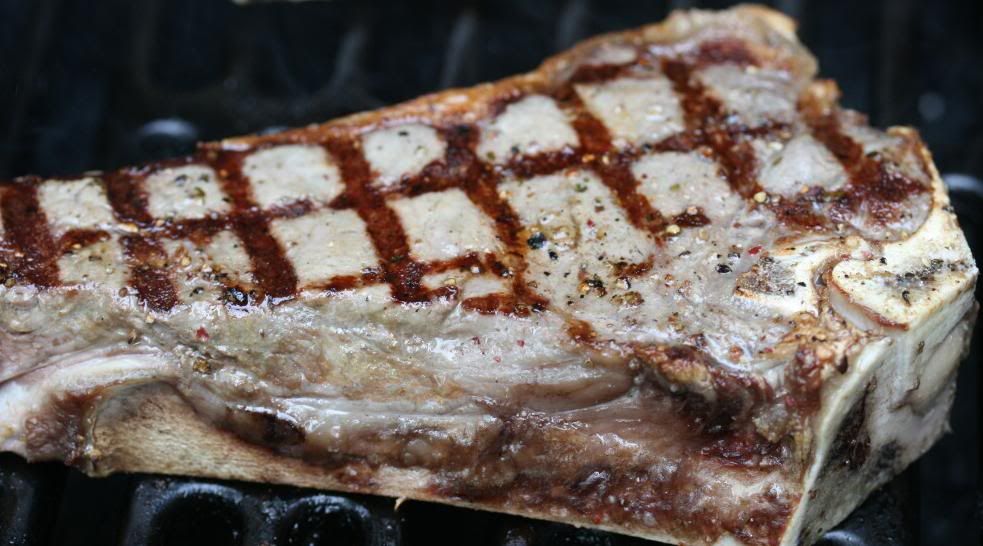
Hopefully, you have selected some grass-fed, organic beef from a butcher like Paisanos, but even if you make your purchasing decisions like a modern day troglodyte basking in the rays of the industrialized food system, it should still taste good, so.... Brush both sides of the steakwith a dab of olive oil and liberally apply salt and pepper. Toss on a hot grill and rotate after about 3-4 minutes and then flip after another 3-4 to create well defined x-cross grill marks. I would suggest this as a good time to prepare a salad or grill some veggies or other nonsense, but I have to start that at least a few minutes prior, because I have a very tiny attention span, and am quickly mesmerized by the fire jumping up to kiss the meat. I charred up some zucchini, tomatoes, portabella mushrooms, and onions, but maybe some thinly sliced cucumbers and tomatoes with feta in a vinegar based dressing....sounds perfect right?
Ok, so the steaks have been on the grill for about 8 minutes on each side.....here comes the important part...take them off, put them on a plate, and leave them the eff alone. I mean it, don't murder a perfectly good steak, wait 10....15 minutes, and then you can start thinking about serving your masterpiece....having trouble waiting? Grab a beer and a lawn chair, quality takes patience.
Hopefully, you have selected some grass-fed, organic beef from a butcher like Paisanos, but even if you make your purchasing decisions like a modern day troglodyte basking in the rays of the industrialized food system, it should still taste good, so.... Brush both sides of the steakwith a dab of olive oil and liberally apply salt and pepper. Toss on a hot grill and rotate after about 3-4 minutes and then flip after another 3-4 to create well defined x-cross grill marks. I would suggest this as a good time to prepare a salad or grill some veggies or other nonsense, but I have to start that at least a few minutes prior, because I have a very tiny attention span, and am quickly mesmerized by the fire jumping up to kiss the meat. I charred up some zucchini, tomatoes, portabella mushrooms, and onions, but maybe some thinly sliced cucumbers and tomatoes with feta in a vinegar based dressing....sounds perfect right?
Ok, so the steaks have been on the grill for about 8 minutes on each side.....here comes the important part...take them off, put them on a plate, and leave them the eff alone. I mean it, don't murder a perfectly good steak, wait 10....15 minutes, and then you can start thinking about serving your masterpiece....having trouble waiting? Grab a beer and a lawn chair, quality takes patience.
Subscribe to:
Comments (Atom)